Diagnosed at 48. Rewriting the story ever since.
I help ADHD adults find clarity, confidence, and structure through neurodiversity‑affirming coaching.
About Me……
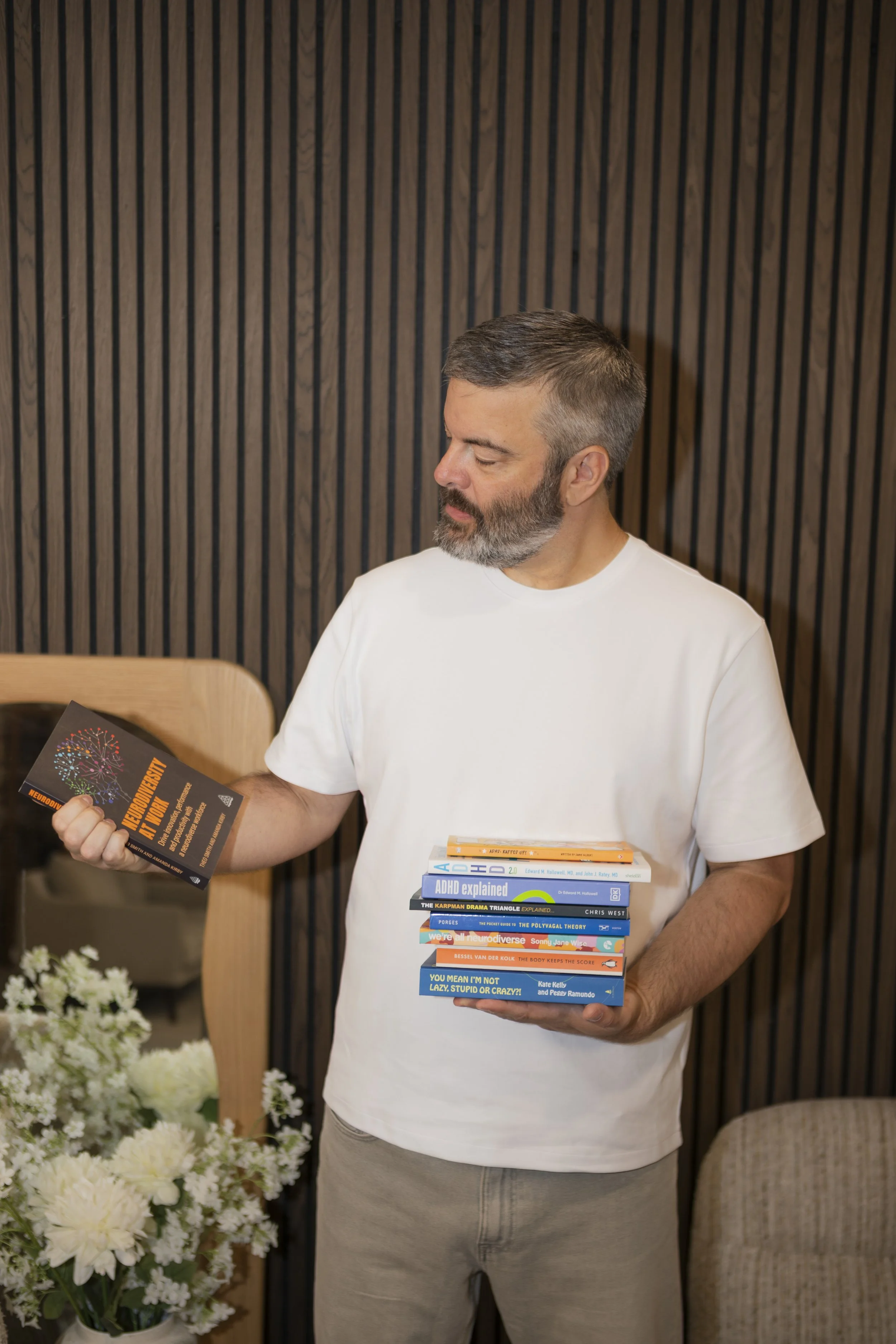
Hi, I’m Chris an ADHD informed coach based just outside London UK.
I help adults with ADHD find clarity, confidence, and practical systems that actually work in real life. My coaching is calm, supportive, and grounded in lived experience — because I know what it’s like to navigate life without understanding your ADHD, and what it feels like when everything finally starts to make sense.
Diagnosed at 48 and everything changed.
For most of my life, I felt like I was running on two tracks at once: capable, driven, full of ideas… but also overwhelmed, exhausted, and constantly fighting my own brain. I didn’t have the language for it. I didn’t have the tools. I just thought I needed to “try harder.”
Being diagnosed with ADHD at 48 wasn’t just a label — it was a turning point.
Suddenly, the patterns made sense. The struggles made sense. The strengths made sense.
And for the first time, I could stop blaming myself and start understanding myself.
That shift changed everything — my confidence, my direction, my wellbeing, and ultimately, my purpose.
Why I Became an ADHD Coach
Once I understood my own ADHD, I realised how many adults were walking around with the same questions, the same frustrations, and the same “why can’t I just…?” moments. But through my training, I also saw how many people — especially girls and women — had spent years being overlooked, misunderstood, or misdiagnosed. Hearing their stories made it clear that so many adults are still searching for answers that were never offered to them.
I wanted to help people experience the clarity, validation, and self‑understanding that changed everything for me.
So I trained with Goldmind Academy as an ADHD‑informed coach through the ICF pathway, and I’m currently working towards my ACC accreditation. I now coach adults across the UK and worldwide, helping them understand their brains, build supportive systems, and create lives that feel calmer, more intentional, and more aligned with who they really are.
“If you’ve met one person with ADHD, you’ve met one person with ADHD.”
“People with ADHD have an Interest-based nervous system, not an importance-based nervous system”
Dr William W.Dodson MD
Phychiatrist Specialising in ADHD
“The ferrari brain with bicycle brakes”
-Dr Edward M. Hallowell, MD
Phychiatrist, ADHD specialist and author
This is also why I created ADHDifference
I understand that ADHD is clinically labelled as a disorder, but I don’t see myself — or my clients — through that lens. To me, it’s a difference: a distinct way our brains process, feel, create, and move through the world. It only looks “disordered” when measured against neurotypical expectations. When you understand your ADHD on its own terms, the shame drops, the story shifts, and you finally get to see the strengths that were there all along.
How I Coach
My coaching is calm, structured, and grounded in lived experience. I work in partnership with you, using an approach that honours your identity, your strengths, and your emotional world. ADHD shows up differently for everyone — across gender, life stage, culture, and personal history — and many people come to coaching after years of feeling misunderstood or misdiagnosed.
My practice is aligned with ICF principles: presence, curiosity, cultural awareness, and supporting you to generate your own insights and direction.
ADHD is shaped by many layers — identity, culture, gender, environment, work, relationships, and personal history. During a seven‑day intensive with Goldmind Academy in Granada Spain, I was the only man in a cohort of women navigating hormonal shifts from monthly cycles to peri‑menopause and menopause. Hearing their experiences gave me a deep understanding of how ADHD interacts with hormonal change and lived reality.
It was also where I recognised how often girls and women are overlooked. For decades, ADHD criteria were based on boys, leaving many girls labelled as anxious, sensitive, daydreamy, or “too emotional.” Many were misdiagnosed with depression, anxiety, or even bipolar disorder — carrying those labels for years without anyone considering neurodivergence.
This insight reshaped the way I coach. It taught me to see every client through multiple lenses and honour the wider context of their life. Every story is layered, personal, and deserving of curiosity and respect — and that intersectional awareness sits at the heart of my practice.

What Sessions Look Like
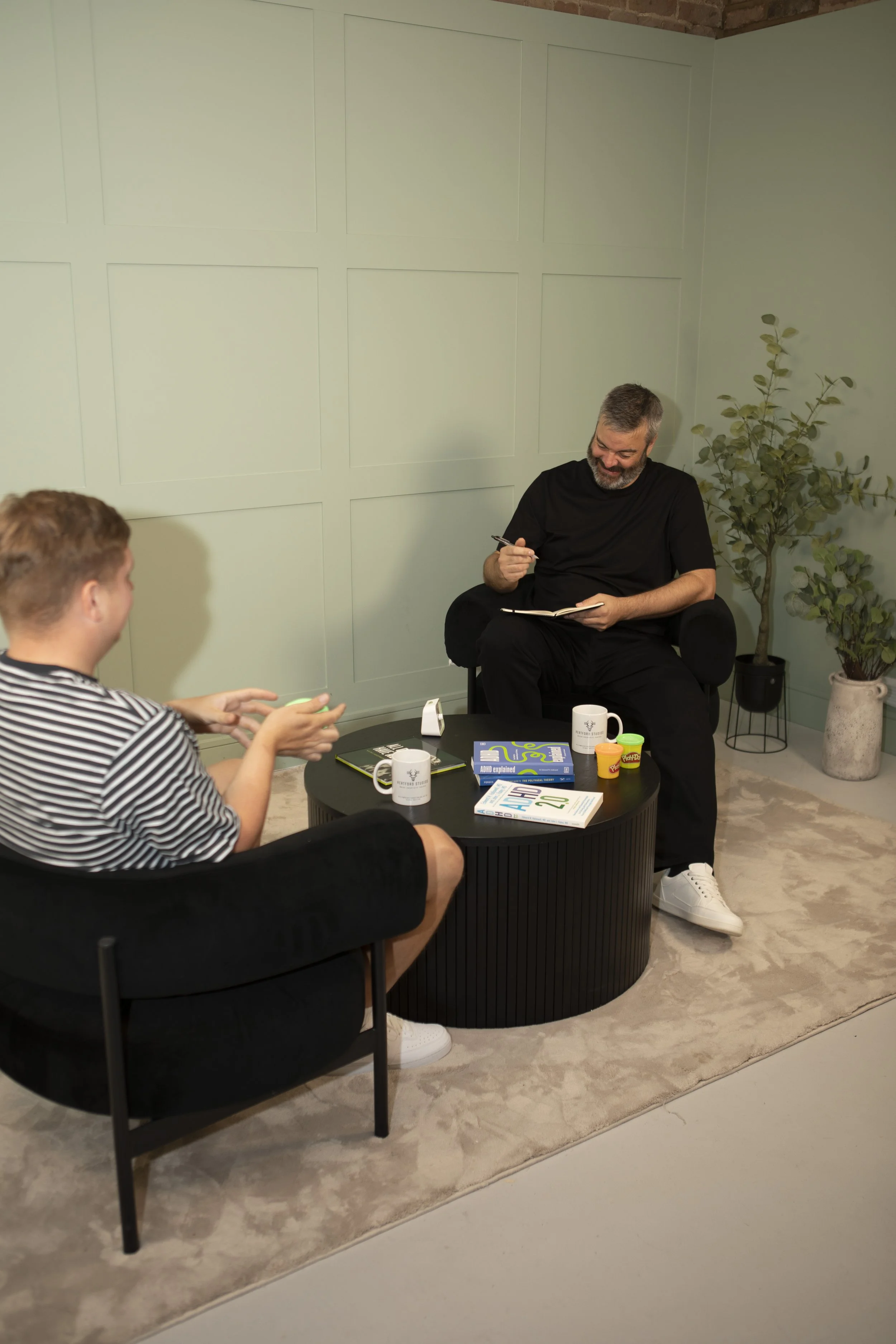
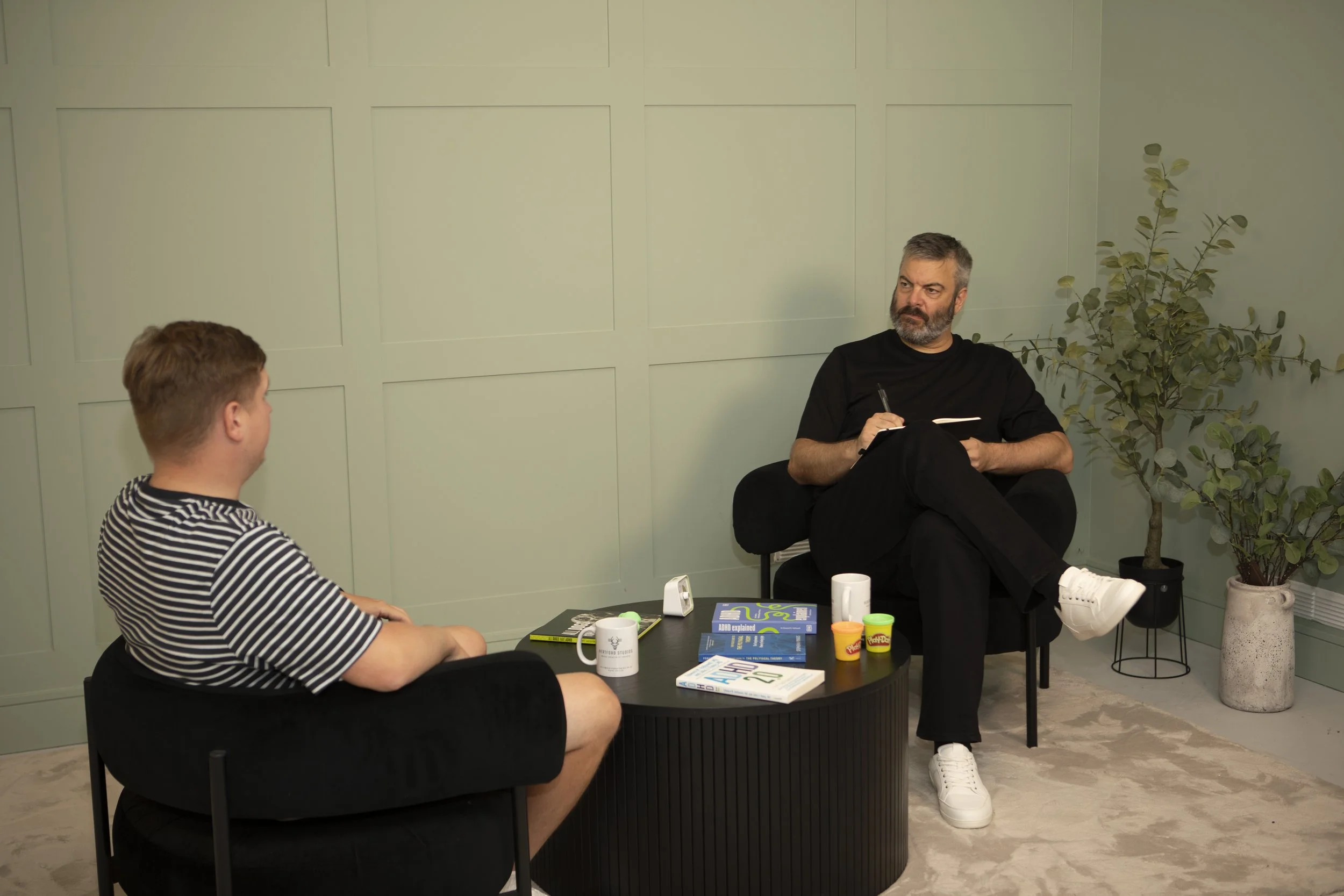
Each session is a calm, collaborative space where you can slow down, reflect, and explore your lived experience. My role is to partner with you — supporting your thinking, deepening your awareness, and helping you create meaningful, sustainable change. Everything we do is aligned with ICF principles: presence, curiosity, cultural awareness, and respect for your autonomy.
Sessions are 50 minutes, giving you time to settle, explore, and leave with clarity and direction.
A grounding check‑in
We begin by noticing where you are emotionally, mentally, and physically. This helps us work with your energy and create a supportive pace for the session.
Strengths‑based reflection
We identify the strengths you already use — creativity, resilience, intuition, empathy, hyperfocus — and explore how they can support your goals. This keeps the work empowering and aligned with the ICF belief in client capability and resourcefulness.
Emotions‑informed awareness
Emotions are valuable information. They reveal what matters, what drains you, what energises you, and where your boundaries need to be. We explore emotional patterns with curiosity rather than judgement, helping you respond with clarity instead of overwhelm.
Collaborative goal‑setting
You choose the direction; I support your thinking and help you uncover what’s possible. We co‑create goals that feel meaningful, achievable, and aligned with your values — not goals driven by pressure or perfectionism.
Real‑world tools and supportive systems
You leave each session with practical strategies that work with your ADHD, not against it. These tools are tailored to your strengths, your environment, and your lived experience.
A non‑judgemental partnership
Coaching is a collaborative relationship. You bring your lived experience; I bring presence, curiosity, and structure. Together, we create space for growth, clarity, and self‑trust.
Coaching Packages
I offer flexible coaching options tailored to your goals, energy, and pace. You can choose between:
Each session is 50 minutes
Pay‑As‑You‑Go sessions
6‑Session Package
12‑Session Package
Pricing is available on request.
What Happens After the
Discovery Call?
If we both feel coaching is a good fit, I’ll send a short onboarding email that gently walks you through the next steps. This includes:
your coaching agreement
recording consent if applicable (ICF requirement)
onboarding forms
scheduling information
payment details
Everything is kept simple, clear, and ADHD‑friendly so you know exactly what to expect before we begin working together.
What is a Free 30 Minute Discovery Call?
A Discovery Call is a relaxed, no‑pressure conversation where you and I explore whether ADHD coaching feels like the right fit for you. It’s not a coaching session, and there’s no expectation to sign up. It’s simply a space for clarity, questions, and connection.
This call is designed to help you understand what coaching looks like, how it works, and how it could support you — all in a calm, supportive environment.
What Happens During the Call?
1. A Warm Welcome
We start with a simple check‑in so you feel grounded and comfortable. You don’t need to prepare anything or bring anything.
2. Exploring What You’re Looking For
You can share what’s been feeling challenging, what you’d like support with, or what’s brought you to coaching. There’s no right or wrong answer — just your experience.
3. Understanding ADHD Coaching
I’ll explain how ADHD coaching works, what my role is, and how coaching differs from therapy, mentoring, or consulting. This is fully aligned with ICF standards: coaching is a collaborative, client‑led partnership focused on awareness, learning, and forward movement.
4. Your Questions
You can ask anything — about the process, the structure, the sessions, confidentiality, recording (for accreditation), or anything else you’re unsure about.
5. Checking the Fit
We explore whether coaching feels supportive for you right now. This is a mutual decision — there’s no pressure, no sales pitch, and no obligation to continue.
Ready to Explore Coaching?
Dont take my word for it 😊
-
![]()
"There was something human and honest in the way he held the session, which made it easier for me to open up and reflect without feeling judged."
“I had the chance to be coached by Chris, and what stayed with me was how quickly i felt safe to share. He has a very easy going and genuine presence. Nothing felt forced or overly formal. There was something human and honest in the way he held the session, which made it easier for me to open up and reflect without feeling judged. Im really happy to see him starting hois practice and wish him all the best”
-Dulce, Portugal
-
![]()
“Smooth doesn’t mean perfect. Smooth means riding the wave 🏄♀️“
“This perfectly captures what coaching with Chris feels like. Instead of trying to fight the tide, I'm learning to listen to my needs, trust myself, and stay present. I recently had a massively important professional meeting coming up and was feeling totally overwhelmed and confused. I had no idea how to position myself or navigate it without letting the anxiety take over.
Chris, with his pincering questions and grounded, calming attitude, helped me to shift my mindset. I learned to focus on my preparation, set my boundaries, and actually trust myself. Thanks to him, I went into that meeting feeling grounded, present, and completely clear on my value.”
-Noa, Netherlands
-
![]()
"I love that I can just show up to our sessions exactly as I am without worrying about being misunderstood or judged."
“Chris is a wonderful coach to work with. He’s so easy to talk to, incredibly warm and empathic. I love that I can just show up to our sessions exactly as I am without worrying about being misunderstood or judged. I have completely changed my mindset on some personal issues I felt were holding me back. I am in a much calmer place and my head feels much lighter. His coaching has made a real difference to me, which has been a game changer.”
-Catie, Bournemouth UK
-
![]()
"I always left our sessions feeling more confident and more capable"
“I really enjoyed working with Chris. He made me feel safe, supported and never judged, which made it so much easier to work through some stressful situations. Chris never told me what to do. Instead, he asked thoughtful questions, championed my strengths, and helped me find my own way forward. I always left our sessions feeling more confident and more capable. I highly recommend working with Chris. Thank you for such a positive experience!”
-Prue, Western Australia
-
![]()
"There’s a real magic in how he guides us to find the answers ourselves rather than simply giving them to us."
“There’s something genuinely special about the way Chris coaches. There’s a real magic in how he guides us to find the answers ourselves rather than simply giving them to us. That alone is a huge morale boost, you leave each session feeling more capable, more confident and more in control. And then there’s the added bonus of actually figuring things out along the way! Chris has a brilliant way of helping you see what you’re capable of, and it really makes
-Chelsea, UK
-
![ADHD Coach UK | ADHD Coaching for Adults | ADHDifference Coaching]()
"Our sessions gave me new insights and perspectives that helped me make significant progress in my personal processes."
Chris is a very knowledgeable and skilled coach specializing in ADHD. Working with him helped me better understand communication with different people, how we can perceive each other differently, and how this can affect me.
It was also very valuable to identify my own strengths in communication. Our sessions gave me new insights and perspectives that helped me make significant progress in my personal processes.
-Daria, France